
Immediate Eye Emergency CareUrgent Eye Care, 7 Days a Week
Sudden vision loss, eye pain, flashes, floaters or eye injury. When something is wrong with your eyes, every second matters. At HARINA Optométristes in Mont-Royal, you are seen by Dr. Harina Thyriar, Optometrist, who is certified in ocular pathology and equipped with full diagnostic imaging to assess eye emergencies and act quickly to protect your vision and comfort.
Immediate Assistance for Eye Emergencies
Urgent eye care when it matters most. We are here 7 days a week to protect your sight.
Eye emergencies can happen without warning. A sudden change in vision, sharp pain, a foreign body, or a chemical splash should never be ignored. At HARINA Optométristes, our clinic is open every day of the week, with extended evening hours on Thursdays and Fridays, so you can be evaluated quickly when your eyes need immediate attention.
When Should You Treat It as an Eye Emergency?
If you have any of the symptoms below, contact us immediately for an urgent assessment.
- Sudden loss of vision in one or both eyes
- New flashes of light or a sudden shower of floaters
- Eye pain, pressure or a severe headache with vision changes
- Red eye with decreased vision or significant light sensitivity
- Foreign body in the eye, including metal, dust or wood
- A scratch on the eye or a feeling that something is scraping the surface
- Chemical exposure to the eye from cleaners or industrial products
- Double vision that appears suddenly
- Any trauma to the eye or surrounding area
These symptoms can indicate serious conditions such as retinal detachment, corneal abrasion or infection, acute glaucoma, intra-ocular inflammation or other sight-threatening problems. They should never be watched or waited out.
YOUR VISION CANNOT WAIT. Protect your sight. Request an immediate appointment.
Why Immediate Eye Care Matters
Many eye emergencies are time-sensitive. Fast diagnosis and treatment can mean the difference between full recovery and permanent vision loss.
At HARINA Optométristes, we combine clinical training in ocular pathology with advanced diagnostic technology to:
- Identify whether your symptoms are urgent, semi-urgent or can be safely monitored.
- Detect retinal tears or detachment using retinal imaging and OCT scans.
- Measure eye pressure and evaluate the optic nerve for signs of acute glaucoma.
- Assess corneal health for abrasions, infections and contact lens complications.
- Recognize eye manifestations of systemic conditions such as hypertension or diabetes.
If your condition requires hospital care or urgent surgery, we coordinate rapid referral to the appropriate specialist or emergency department, along with clear documentation of our findings to avoid delays.
How We Assess Eye Emergencies
Every eye emergency visit is focused on one goal: quickly understanding what is wrong and how to protect your sight.
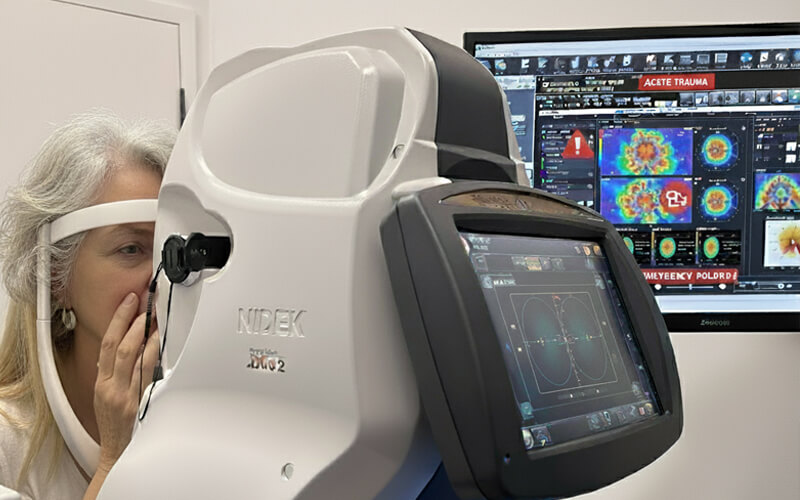
Depending on your symptoms, your emergency assessment may include a combination of visual acuity testing, eye pressure measurement, slit-lamp examination, retinal photography and OCT imaging. This allows your optometrist to see both the surface and the internal structures of the eye in detail.
With this information, we can distinguish between minor irritations and serious conditions, decide whether treatment can begin in clinic, and determine if urgent referral is required.
- Emergency Triage and Symptom History We begin with targeted questions about when your symptoms started, what you were doing, your medical history, medications and any recent trauma or exposure.
- Visual Acuity and Pupil Assessment Measuring how clearly you see in each eye and checking pupil responses helps identify neurological or retinal causes of vision loss.
- Eye Pressure Measurement A gentle, non-contact tonometer is used to measure intraocular pressure, which is essential in detecting acute glaucoma and other pressure-related problems.
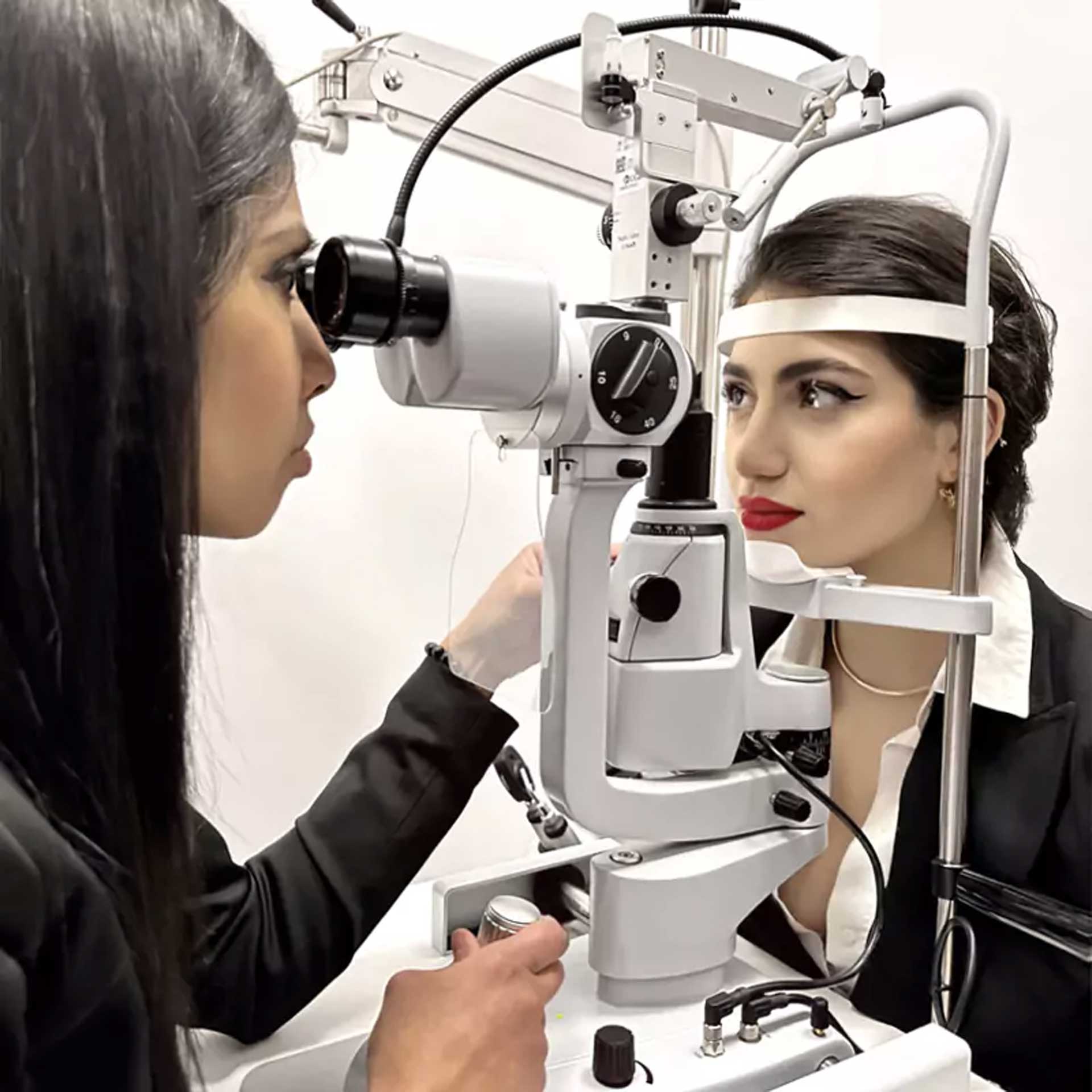
- Slit-Lamp Examination Using a high-magnification microscope, we evaluate the eyelids, cornea, conjunctiva, anterior chamber and lens, and can identify abrasions, foreign bodies, infections and inflammation.
- Retinal Photography and OCT Imaging Digital retinal images and cross-sectional OCT scans allow us to detect retinal tears, detachment, bleeding, swelling and other changes that may not be visible with standard examination alone.
- Contact Lens and Corneal Surface Evaluation For contact lens wearers, we check lens fit, corneal health and oxygenation to identify lens-related infections or hypoxia that can damage the cornea.
- Treatment Plan and Follow-Up Once the cause is identified, we discuss your diagnosis in clear language, begin appropriate treatment when possible, and arrange close follow-up to ensure the condition is improving.
- Urgent Referral When Needed If your condition requires surgical or hospital-based care, we arrange referral to the appropriate ophthalmologist or emergency department with detailed documentation of our findings.
Common Eye Emergencies We See
Eye emergencies range from painful but minor problems to conditions that threaten permanent vision loss. During your emergency visit, we evaluate and manage a wide range of urgent situations.
Retinal and Vision Threatening Conditions
- Retinal tears and detachment: New floaters, flashes and a curtain or shadow over your vision.
- Sudden vision loss: Rapid changes in central or peripheral vision that require immediate assessment.
- Macular bleeding or swelling: Distorted or blurred central vision.
- Acute angle-closure glaucoma: Eye pain, haloes around lights, nausea and blurred vision.
Surface, Trauma and Infection
- Foreign body in the eye: Metal, wood, dust or other particles stuck on or in the cornea.
- Corneal abrasion and contact lens complications: Pain, tearing, light sensitivity and the feeling of something stuck in the eye.
- Severe conjunctivitis or keratitis: Red, painful eyes with discharge or reduced vision.
- Chemical exposure: Splashes from cleaners or industrial products that require immediate irrigation and evaluation.
Eyelid and Surrounding Tissue
- Styes and eyelid infections: Localized swelling, redness and tenderness of the lid margin.
- Swollen or drooping eyelids: Changes that interfere with vision or suggest deeper inflammation.
- Blunt trauma around the eye: Bruising, swelling and tenderness after impact injuries.
Neurological and Systemic Red Flags
- Sudden double vision: Seeing two images of one object, especially with other neurological symptoms.
- Headache with vision changes: Visual symptoms linked with severe headache, dizziness or weakness.
- Eye signs of systemic disease: Changes related to diabetes, high blood pressure or autoimmune disease.
What To Do Right Now if You Have an Eye Emergency
Simple steps can reduce the risk of further damage while you arrange urgent care.
- Do not rub your eye. Rubbing can worsen scratches, move a foreign body deeper or increase bleeding.
- Do not try to remove embedded objects. If something is stuck in the eye, leave it in place until assessed.
- Do not apply eye drops unless advised by a professional. Some drops can mask symptoms or worsen certain conditions.
- For chemical exposure: Rinse the eye with clean, room-temperature water for at least 15 minutes, then contact us or go to the nearest emergency department.
- For contact lens wearers: Remove your lenses if possible and do not reinsert them until your eyes are examined and cleared.
At HARINA Optométristes, your emergency visit is overseen by Dr. Harina Thyriar, Optometrist, who is certified in ocular pathology. This qualification allows her to diagnose complex conditions, identify signs that require urgent intervention and begin the correct management without delay.
If you are unsure whether your symptoms are an emergency, it is safer to contact us so we can guide you on the next steps.

Not Sure If It Is an Emergency?
Call us and describe your symptoms. We will tell you if you should come in urgently or seek hospital care.
It is not always easy to know if an eye problem is urgent. You may wonder if you should wait, book a routine exam or go straight to the hospital. Our team is here to help you make that decision safely.
When you call, we ask targeted questions about your vision, pain, light sensitivity, recent injuries, contact lens wear and general health. Based on your answers, we can often determine how quickly you need to be seen and whether you should be assessed in clinic or in a hospital emergency department.
If in doubt, contact us. It is always better to check than to wait on a potentially serious problem.
Alternatively, you may call 8-1-1 to speak with a registered nurse available at all times, seven days a week. If you feel that someone's life or health is in immediate danger, please call 9-1-1 or go to the nearest hospital emergency department.
Eye Emergency? Contact Us Now.
We are open 7 days a week and offer urgent eye assessments for sudden vision changes, pain, trauma, flashes, floaters and more. Your vision is too important to wait.